
 Українська
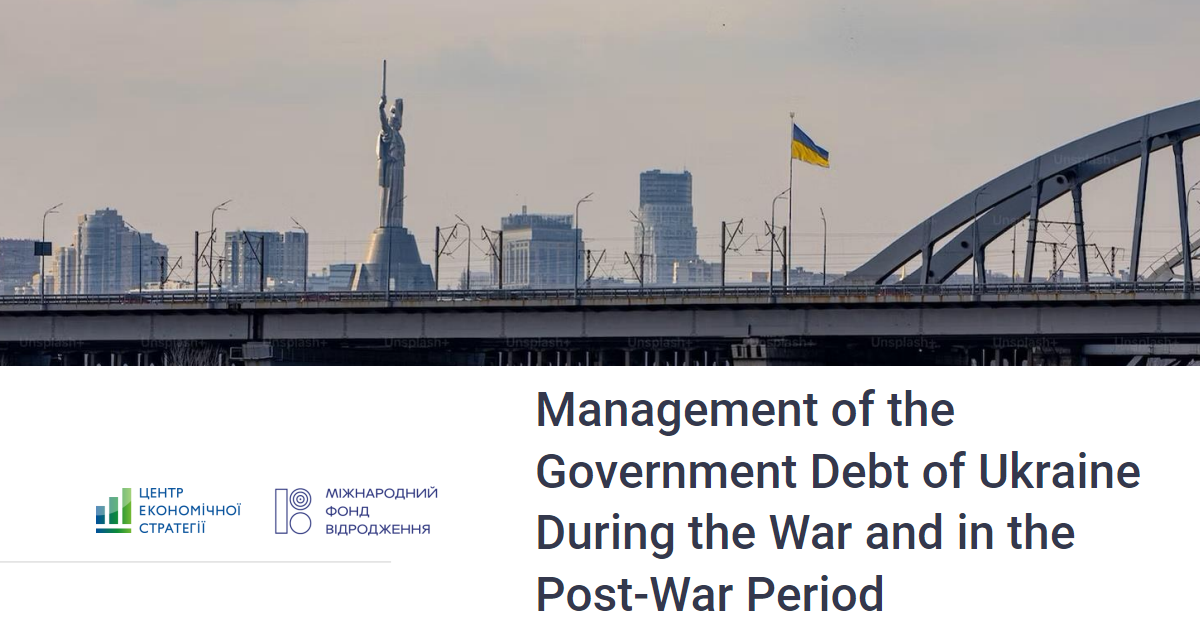
 Management of the Government Debt of Ukraine During the War and in the Post-War Period
International experience, mechanisms and tools used by other countries to reduce their debt burden
- 25 September 2023
- Centre for Economic Strategy
- France
This study examined international experience, mechanisms and tools used by countries to reduce their debt burden. Interviews with leading Ukrainian and foreign analysts were conducted to determine the space for these and other instruments in the strategy of public debt management during wartime and the post-war period.
Among the factors of reducing the debt burden, the study considers the attraction of international assistance in the form of grants and cheap and long loans; the policy of “financial repression” when debt rates are lower than inflation; economic growth; primary budget surplus; debt restructuring; as well as privatization of state assets and reparations from the aggressor country.
One of the focuses of the study was cooperation with the IMF. For the first time in its history, the IMF is lending to a country at war and uncertain about its ability to repay its debts. To do this, it changed its own policies. The IMF was able to approve an Extended Fund Facility program worth USD 15.6 billion. The program will allow refinancing the debt to the Fund, which otherwise would have to be repaid with the help of other donor countries.