
 Українська
 Communities of War: Effective and Opportune
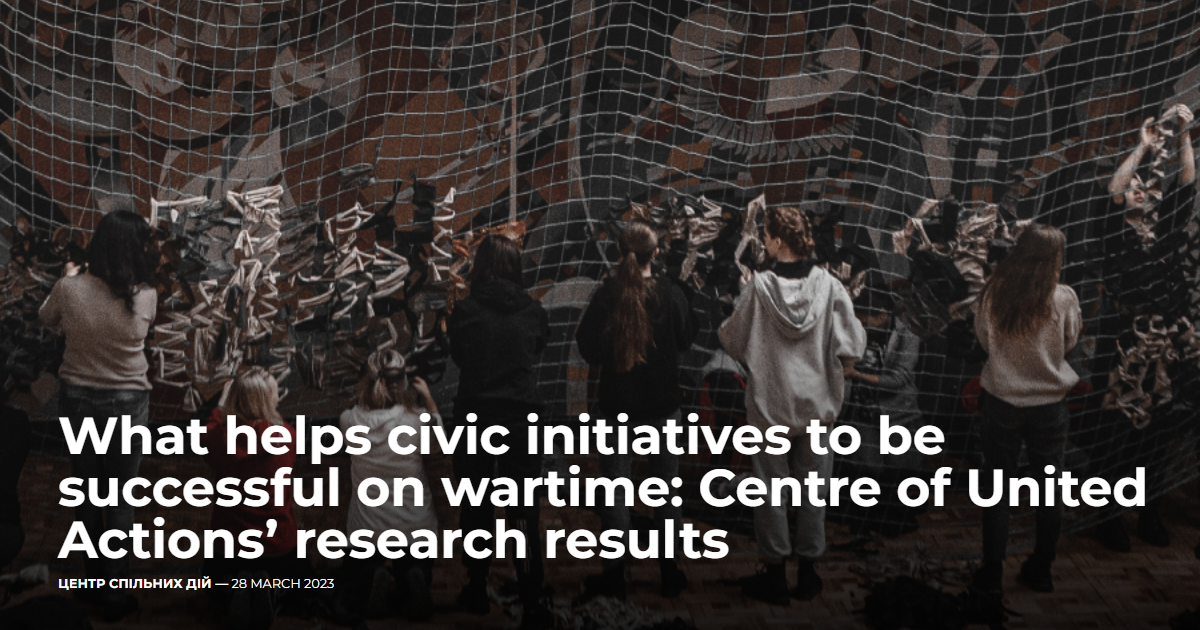
Volunteer-based initiatives have limited human, financial, and material resources. Those that do not try to solve problems on their own but seek help from other groups: volunteers, businesses, local authorities, and NGOs, are more effective.
In addition to active cooperation between groups, initiatives also benefit from the existence of a stable group and connections. If initiatives are created on the basis of an existing organization or team, this allows for a quicker determination of the format of activities and distribution of responsibilities among participants.
Civic initiatives are also more successful when they involve their target audience in volunteering. One such example is the involvement of internally displaced persons as a human resource. In the 24 initiatives studied, internally displaced persons became staff members of humanitarian headquarters, organized events for local residents, or helped their communities under occupation.
The study showed that the grassroots movement in communities is permanent and sustainable. This is confirmed by the fact that 81% of the surveyed civic initiatives continue to work a year after the start of the full-scale war. The most sustainable formats were information projects and volunteer headquarters – 100% and 92% respectively continue to operate to this day.