
 Українська
 The Reconstruction of Ukraine: Historical Parallels and the Role of the EU
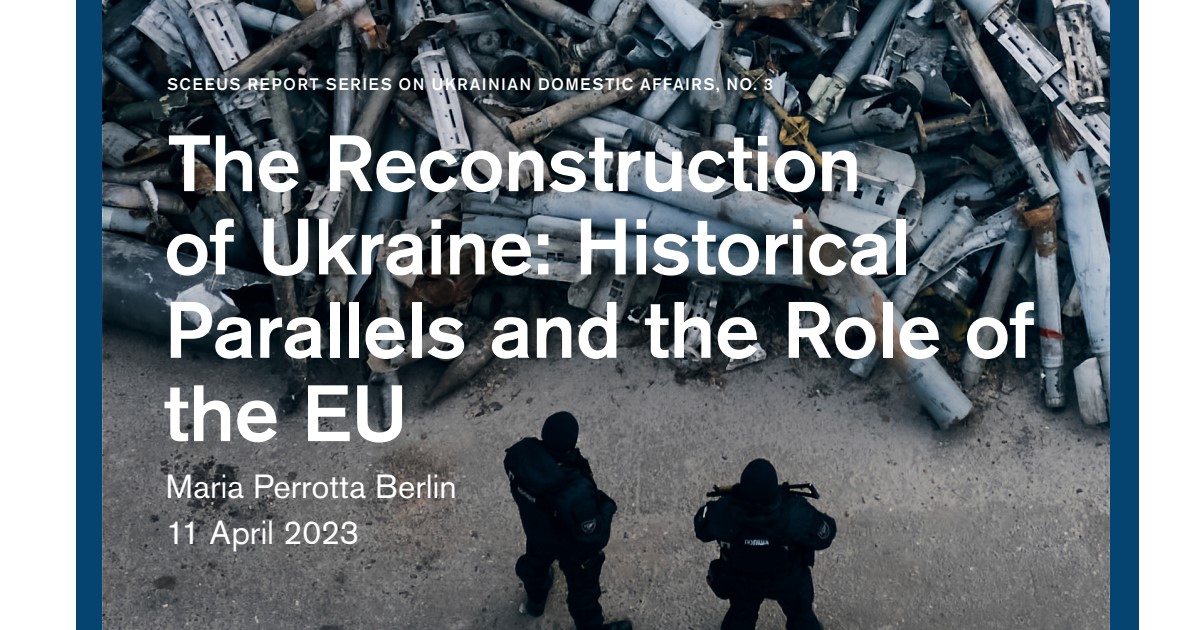
The EU and the wider international community's perspective on Ukraine's reconstruction. What lessons can be learned from historical parallels for Ukraine?
Go to reportMore than a year of war since Russia’s full-scale invasion of Ukraine on February 24, 2022, which included targeted bombing of civilian objects and infrastructure, has caused huge damage to Ukraine’s physical capital and economy, as well as horrific human losses. The country needs financial support to cover recurrent costs of $50 billion per year, while capital expenditures to repair the damage are estimated to be in the range of $100-250 billion. Based on the “build back better than before” principle, reconstruction will cost between USD 750 million and USD 1.1 billion. For comparison, the global aid budget in 2021 was $185 billion, and Ukraine’s entire gross domestic product was $165-200 billion. The Central Bank of Russia’s assets held abroad are estimated at $300 billion. In financial terms, there is no doubt that the European Union (EU), along with the broader coalition of Ukraine’s allies, can afford to support Ukraine to victory and finance its post-war reconstruction.
As in the historical experience of the Marshall Plan, motives of strategic interest along with simple altruism are strong arguments in favor of this. However, the political will will depend crucially on how and when the war ends and on Ukraine’s commitment to successful reforms. The prospect of EU membership is a guiding light for Ukraine that can both guide the practical details and inspire the political will to navigate the comprehensive reform path that lies ahead. This process is not without its risks, and elements of economic integration should be implemented in parallel with EU accession.